Lumens, Runtime, and Price: How to Find the Solar Light That Actually Fits Your Needs
Walk through any home improvement store or scroll through an online retailer, and the sheer volume of solar lighting options becomes immediately overwhelming. Manufacturers promise extraordinary brightness, all-night battery performance, and unbeatable value—often simultaneously. The challenge for any thoughtful buyer is determining which of those claims hold up under real-world conditions and which are little more than packaging optimism.
Finding the right solar light is less about identifying the most impressive spec sheet and more about aligning performance characteristics with the actual demands of a specific location and use case. That alignment—between lumens, battery runtime, and purchase price—is what separates a genuinely useful installation from one that underdelivers within the first season.
Understanding Lumens: More Is Not Always Better
Lumens measure the total quantity of visible light a fixture emits. In traditional lighting, higher lumens typically signal a more powerful bulb. In solar lighting, however, the relationship is more nuanced.
A solar pathway light rated at 10 to 30 lumens is generally appropriate for gentle border illumination along a walkway or garden edge. These fixtures are designed to guide rather than flood—they create visual definition without washing out the ambient character of an outdoor space. Pushing significantly beyond that range for a simple decorative application often results in a harsh, unflattering effect that most homeowners find unappealing.
Step lighting and porch accent fixtures typically operate well in the 50 to 200 lumen range, providing enough output to improve visibility without drawing excessive power from the battery. For larger areas such as driveways, patios, and rear yards, wall-mounted or post-mounted solar area lights in the 300 to 800 lumen range offer meaningful coverage.
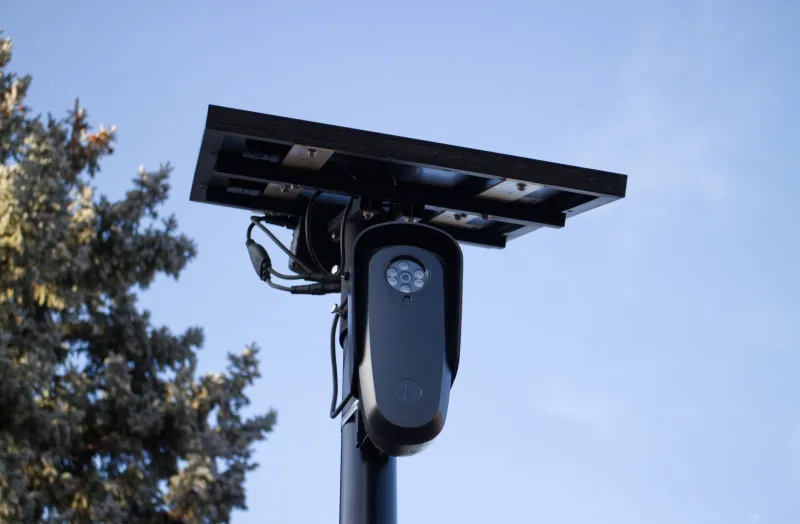
Security floodlights represent the upper tier of residential solar lighting performance. Quality models in this category deliver 1,000 to 2,500 lumens or more, activating via motion sensor to deter intruders and illuminate large zones around garages, storage buildings, or commercial entry points. It is worth noting that these fixtures consume battery reserves rapidly at peak output, which makes runtime a critical consideration at this performance level.
Battery Runtime: The Specification That Demands Scrutiny
Manufacturer-listed runtime figures are among the most frequently misunderstood metrics in solar lighting. A product described as offering "12 hours of illumination" may achieve that figure only under ideal test conditions—full sun charging, moderate temperatures, and reduced brightness settings.
In practice, several variables compress real-world runtime considerably. Overcast or partially cloudy days reduce solar panel charging efficiency, meaning the battery enters the night cycle with less stored energy than the specification assumes. Colder temperatures, common across much of the continental United States from October through March, reduce lithium-ion battery capacity. And higher brightness modes or frequent motion-sensor activations draw down reserves faster than continuous low-level operation.
A more reliable approach to evaluating battery performance involves examining battery capacity in milliampere-hours (mAh) alongside the fixture's wattage draw. A 2,000 mAh battery powering a 2-watt LED will behave very differently under sustained use than the same battery paired with a 5-watt security array. Manufacturers who publish both figures are generally providing a more transparent picture of actual performance.
For buyers in northern states or regions with frequent cloud cover, selecting a fixture with a battery capacity at least 20 to 30 percent above the minimum needed for a single night's runtime provides a meaningful buffer against suboptimal charging days.
Matching Use Case to Product Category
Rather than evaluating solar lights in the abstract, it is more productive to begin with a specific application and work backward to the appropriate specification range.
Pathway and Border Lighting: Low-lumen stake lights or ground-level fixtures in the 10 to 50 lumen range are well-suited here. Runtime demands are modest, and battery requirements are minimal. Budget-conscious buyers can find reliable options in this category at price points between $5 and $20 per unit without sacrificing meaningful performance.
Porch, Deck, and Patio Accent Lighting: Wall sconces and hanging lanterns in the 100 to 300 lumen range provide a welcoming ambient environment for outdoor entertaining and daily use. These fixtures benefit from higher-capacity panels and batteries to sustain output across longer evening hours. Expect to invest $25 to $75 per fixture for dependable performance from established manufacturers.
Driveway and Area Lighting: Post-mounted or elevated floodlights in the 500 to 1,000 lumen range handle broader coverage needs. Solar panel size becomes especially important at this tier—look for integrated panels of at least 5 watts to support adequate charging in less-than-ideal conditions. Quality fixtures in this category typically range from $50 to $150.
Security and Commercial Applications: Motion-activated floodlights delivering 1,500 lumens or more represent the most demanding category in residential and light commercial solar lighting. Battery capacity, panel wattage, and build quality all require careful evaluation. Reputable products in this range carry price tags between $80 and $250, and the investment is generally justified by the performance gap between budget-tier and mid-range options.
A Decision-Making Framework for Smarter Purchases
Approaching a solar lighting purchase with a structured evaluation process reduces the likelihood of buyer's remorse and ensures that the final selection genuinely serves its intended purpose.
Begin by defining the primary function of the fixture: Is it decorative, functional, or security-oriented? That determination immediately narrows the relevant lumen range and battery requirement.
Next, assess the solar resource available at the installation site. South-facing locations with minimal shading represent ideal conditions. North-facing walls, heavily wooded lots, or areas with significant seasonal shading require fixtures with larger panels or higher-capacity batteries to compensate for reduced charging time.
Then evaluate manufacturer transparency. Brands that publish detailed specifications—including panel wattage, battery capacity in mAh, and realistic runtime at specific brightness levels—are demonstrating a level of accountability that budget-tier products rarely offer. That transparency is itself a quality signal.
Finally, apply a realistic budget that accounts for quantity. A homeowner illuminating a 200-foot driveway border with pathway lights may need 20 or more fixtures. Purchasing $8 units without adequate specifications to meet the site's conditions will likely result in repeated replacements—erasing any initial savings. Investing modestly more per unit in that scenario frequently delivers substantially better long-term value.
The Balance Worth Pursuing
The most effective solar lighting systems are not necessarily the brightest, the longest-running, or the least expensive. They are the ones where brightness, battery performance, and price intersect most cleanly with the demands of a specific application.
That intersection is achievable for virtually any homeowner or business owner willing to invest a modest amount of time in understanding the specifications that genuinely matter. When those three variables align, the result is a lighting system that performs reliably night after night—and one that justifies every dollar of its cost through consistent, purposeful illumination.