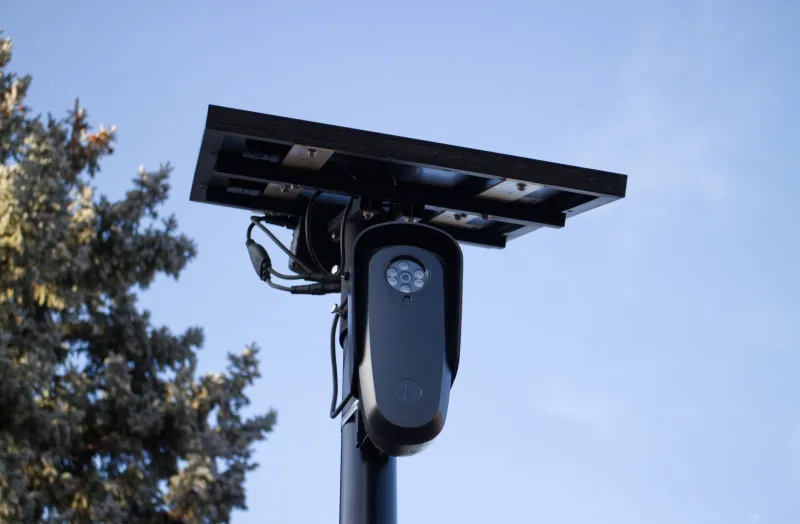
When Your Solar Lights Work Better Than Advertised: Recognizing Overperformance and Putting It to Work
Most homeowners install solar lighting with a specific outcome in mind: reliable illumination at a predictable cost, without drawing from the utility grid. The expectation is modest — that the system will perform roughly as specified on the product sheet. What relatively few anticipate is the opposite problem: a system that consistently outperforms its rated capacity, leaving untapped potential sitting idle night after night.
This phenomenon, increasingly common as solar technology matures and installation practices improve, presents a genuinely interesting challenge. When a system exceeds its design parameters, the question shifts from "will this work?" to "what should I do with everything it's delivering?"
Why Solar Systems Outperform Their Ratings
Manufacturer specifications are, by necessity, conservative. They are calibrated against average conditions — median sun hours for a given climate zone, standard panel orientations, and typical seasonal degradation curves. Real-world installations, however, rarely conform to averages.
A homeowner in the Sun Belt who carefully angles panels toward true south, maintains them free of debris, and benefits from a run of unusually clear winters may find that their system generates meaningfully more energy than the product documentation suggested. Similarly, the steady improvement in photovoltaic cell efficiency over the past decade means that systems purchased even two or three years ago may now house panels that, due to manufacturing refinements, perform above their original rated output.
Battery technology has followed a parallel trajectory. Lithium iron phosphate cells, now standard in many mid-range and premium solar fixtures, retain capacity more effectively across temperature swings than the lead-acid or older lithium chemistries they replaced. A fixture installed in Minnesota that was expected to struggle through February may now sustain full-night illumination even during the coldest stretches — a direct result of improved energy storage, not changed weather.
Installation quality also plays an underappreciated role. Homeowners who have educated themselves about solar placement — avoiding shade from late-afternoon tree growth, cleaning panels seasonally, and positioning fixtures to maximize daily sun exposure — are effectively unlocking performance that casual installations leave on the table.
How to Recognize Overperformance in Your Own System
Overperformance is not always obvious. Unlike a tripped breaker or a burned-out bulb, a solar fixture that is generating surplus energy offers no visible alert. The signs are subtler.
The most reliable indicator is runtime. If your motion-activated path lights or dusk-to-dawn fixtures are consistently illuminating well past their rated hours — or maintaining full brightness through the early morning when they were expected to dim — your system is operating above its specified baseline. Similarly, if battery-powered fixtures that were supposed to require occasional charging during overcast stretches continue performing without interruption through several consecutive cloudy days, that suggests a storage or generation surplus.
Some smart solar fixtures now include companion apps or onboard monitoring that report charge cycles, daily generation, and battery state. For homeowners with access to this data, the evidence of overperformance can be quantified directly. A fixture rated for six hours of illumination that routinely logs eight or nine hours of output is, by any reasonable definition, overdelivering.
For systems without monitoring capability, a simple observational log — noting when lights activate, when they dim, and how they perform after overcast periods — can provide a reasonably accurate performance picture over two to four weeks.
The Strategic Question: Upgrade, Expand, or Optimize?
Once overperformance is confirmed, the homeowner faces a decision that is more nuanced than it first appears.
Expanding the coverage area is the most straightforward option. If the existing system is generating surplus energy, adding fixtures to currently unlit areas of the property — a side gate, a garden path, a detached garage approach — can absorb that surplus productively. This approach effectively increases the value of the original investment without requiring new panels or additional infrastructure in many cases.
Upgrading to higher-output fixtures is a second avenue. A homeowner whose existing path lights are modest in lumen output might replace them with brighter alternatives that draw more power — power the system is already producing but not fully utilizing. This is particularly relevant for properties where security lighting or task illumination around outdoor work areas would benefit from increased brightness.
Redirecting energy to new use cases represents a more creative application. Surplus solar capacity can support outdoor charging stations, low-voltage landscape accent lighting, or decorative seasonal displays. Each of these applications can be added incrementally, allowing the homeowner to test new configurations without committing to a full system redesign.
Doing nothing strategically is also a legitimate choice. If a system is consistently overperforming, its components are likely operating under less stress than they were designed to endure. Batteries that are rarely fully depleted and panels that never strain to meet demand will, in most cases, have longer functional lifespans. The overperformance itself becomes a form of long-term investment protection.
What Overperformance Reveals About the Broader Market
The prevalence of overperforming solar systems reflects something meaningful about where the industry currently stands. Product quality has improved substantially faster than consumer expectations have updated. Many homeowners are still operating with mental models of solar lighting formed during an earlier period — when panels were less efficient, batteries less durable, and product lifespans shorter.
The solar lighting market available to US homeowners today is categorically different from what existed even five years ago. Panels with higher conversion efficiencies, batteries with deeper cycle capacities, and fixtures engineered to tighter tolerances have collectively shifted the performance baseline upward. Specifications that manufacturers publish are increasingly floor estimates rather than ceilings.
For homeowners and property managers willing to pay attention, this shift creates genuine opportunity. A system purchased at a modest price point and installed thoughtfully may deliver outcomes that, a decade ago, would have required a significantly larger investment.
Planning for the Next Stage
Recognizing that a system is overperforming is the first step. Acting on that knowledge strategically is where the real value emerges.
Begin by documenting current performance over a full seasonal cycle if possible. Summer and winter performance profiles differ considerably, and decisions made based on peak-season data alone may not account for winter constraints. Once a complete picture is in hand, map the untapped potential against actual property needs: Which areas currently lack adequate lighting? Where would improved illumination add security value, aesthetic appeal, or functional utility?
From that assessment, a prioritized expansion or upgrade plan becomes straightforward to construct. The system has already demonstrated it can deliver. The remaining work is simply deciding where to direct what it produces.
Solar lighting that exceeds expectations is not a problem to be managed. It is an asset to be deployed — and for homeowners who recognize it as such, the returns extend well beyond what the original installation promised.