Fixtures as Features: Elevating Solar Lighting from Functional Necessity to Landscape Design Element
For much of its commercial history, solar lighting occupied a narrow niche in the outdoor design conversation. Fixtures were chosen for their practicality and price point, installed with minimal aesthetic deliberation, and accepted as a necessary if unremarkable component of a property's exterior. The idea that a solar light might be considered a design statement — a deliberate focal point deserving the same thoughtful consideration as a specimen tree or a custom hardscape feature — would have seemed fanciful a decade ago.
That perception is changing, and changing rapidly. Across the United States, a growing cohort of landscape architects, outdoor living designers, and discerning homeowners are approaching solar lighting as an integral element of landscape composition rather than an accessory applied after the real design work is finished.
The Shift in Design Philosophy
The transformation begins with a fundamental reframing of what outdoor lighting is supposed to accomplish. The traditional answer — illuminate a path, deter intruders, extend usability after dark — is not wrong, but it is incomplete. Lighting shapes perception of space. It creates depth, defines boundaries, draws the eye toward focal points, and establishes mood. These are inherently design functions, and solar fixtures are increasingly capable of fulfilling them with the same sophistication as their hardwired counterparts.
"We stopped thinking of solar lights as the sustainable compromise and started thinking of them as the design opportunity," says one landscape designer based in the Pacific Northwest who has incorporated solar lighting into residential projects ranging from modest suburban yards to multi-acre estate properties. "When you approach a fixture as a sculptural element first and a light source second, the whole design conversation changes."
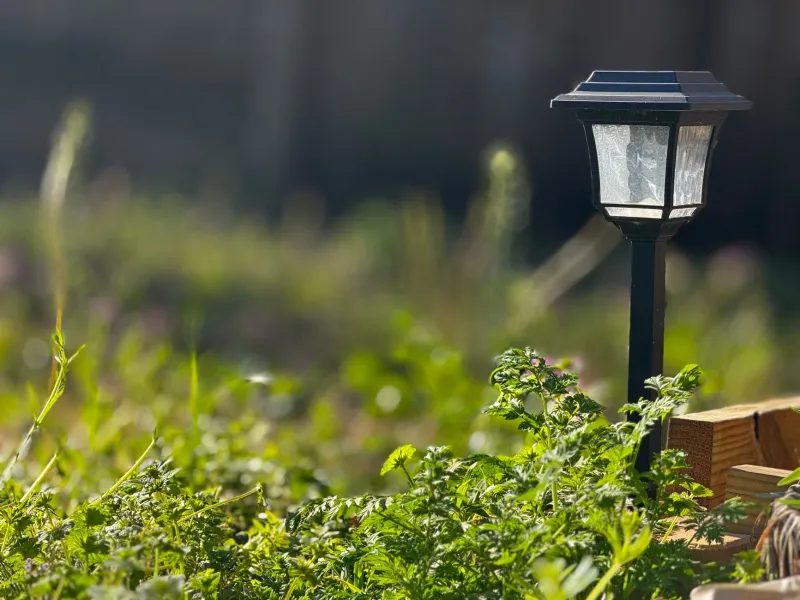
This perspective is gaining traction across the industry as manufacturers respond to market demand with products that prioritize form alongside function. The result is a category that now encompasses architectural-grade bollards, artisan-crafted lanterns, low-profile ground-mounted uplights, and statement pendant fixtures — all solar-powered, all capable of contributing meaningfully to a property's visual identity.
Before and After: What Intentional Solar Design Looks Like
Consider a common scenario: a suburban home in the mid-Atlantic region with a front walkway lined with standard dome-capped solar stake lights purchased from a big-box retailer. The lights function adequately — they illuminate the path and charge reliably in the region's generous summer sun. But they contribute nothing to the property's visual character. They are, in the truest sense, afterthoughts.
In a redesigned version of the same property, those stake lights are replaced with low-profile architectural bollards in a brushed bronze finish that echoes the home's front door hardware. Warm-toned uplights are positioned at the base of a Japanese maple near the entry, washing the tree's branching structure in amber light. A pair of lantern-style post lights flanks the driveway entrance, establishing a visual gateway that signals arrival. Every fixture is solar-powered. The energy source is unchanged; the design outcome is unrecognizable.
This kind of transformation is not limited to high-budget renovations. Designers who work across a range of project scales emphasize that the principles of intentional solar lighting design are accessible at nearly any price point. The key shift is not financial — it is conceptual.
Core Principles of Solar Lighting as Design
Several foundational principles guide the integration of solar lighting into landscape architecture as a design element rather than a functional add-on.
Coherence with the Existing Design Language
Every property has a visual language — a set of materials, finishes, proportions, and stylistic references that define its character. A Craftsman bungalow speaks in warm woods, exposed joinery, and earthy tones. A contemporary minimalist home communicates through clean lines, neutral palettes, and precision. Solar fixture selection should respond to and amplify that existing language rather than contradict it.
Designers recommend identifying two or three dominant material finishes on the home's exterior — hardware, window frames, roofing accents — and selecting solar fixtures that share or complement those finishes. This single discipline, consistently applied, elevates the perceived quality of an entire outdoor lighting scheme.
Layered Light at Multiple Heights
Professional landscape lighting design relies on the concept of layering: distributing light sources across multiple vertical planes to create depth and visual interest. Ground-level path markers, mid-height bollards, eye-level wall sconces, and elevated tree uplights each contribute a distinct layer. Solar lighting, when selected thoughtfully, can participate in every layer of this composition.
The practical constraint of solar design — each fixture must have adequate panel exposure — encourages creative placement strategies that often yield more interesting compositions than conventional hardwired layouts, where fixtures tend to cluster near electrical access points.
The Role of Negative Space and Restraint
One of the most common errors in amateur outdoor lighting design is overillumination — placing too many fixtures and eliminating the shadows and gradients that give nighttime landscapes their drama. Professional designers consistently advocate for restraint, using fewer, better-positioned fixtures to create a composition that rewards the eye rather than overwhelming it.
This principle aligns naturally with solar lighting's practical economics. A well-chosen fixture in the right location outperforms a cluster of mediocre fixtures installed without a compositional strategy. Restraint is not a limitation — it is a design virtue.
Seasonal Adaptability
Unlike hardwired fixtures that remain fixed regardless of seasonal changes, many solar lighting installations can be repositioned as the landscape evolves. This flexibility is a genuine design advantage. Fixtures can be adjusted to highlight seasonal plantings, repositioned to accommodate new hardscape features, or supplemented during outdoor entertaining seasons without electrical modification.
Designers working in regions with dramatic seasonal landscapes — the brilliant fall foliage of New England, the spring wildflower displays of the Texas Hill Country — increasingly treat solar lighting as a seasonal design tool, adjusting placements to celebrate the landscape's changing character throughout the year.
Property Value and Curb Appeal: The Tangible Return
Beyond aesthetics, intentional solar lighting design carries measurable financial implications. Real estate professionals consistently identify outdoor lighting as among the exterior improvements with the strongest return on investment, particularly in markets where evening curb appeal — the impression a property makes during evening showings or evening drives through a neighborhood — influences buyer perception.
Solar lighting, when designed with the same care as traditional landscape lighting, delivers these curb appeal benefits with the added appeal of visible sustainability. In markets where buyers actively value energy efficiency and environmental responsibility — a demographic that skews toward the premium end of the housing market in many US metropolitan areas — a thoughtfully designed solar lighting installation can serve as a meaningful differentiator.
Starting the Conversation Differently
For homeowners ready to approach solar lighting as a design opportunity rather than a checklist item, the starting point is a simple reframing of the initial question. Rather than asking "Where do I need light?" — a purely functional query — begin by asking "What do I want this property to feel like after dark?"
That question opens a design conversation. It invites consideration of mood, focal points, material relationships, and the emotional experience of arriving at or moving through a property in the evening hours. It positions solar lighting not as a product category to be efficiently purchased but as a design medium to be thoughtfully employed.
At Corona Solar Light, we believe that the best solar installations serve two masters simultaneously: the practical imperative of reliable, efficient illumination and the aesthetic aspiration of a property that is genuinely beautiful after the sun goes down. These goals are not in tension. Pursued together, they produce outdoor environments that are greater than the sum of their components — and that demonstrate, compellingly, that clean solar energy and refined design belong in the same conversation.