What Installation Professionals Wish You Knew Before You Spent a Dollar on Solar Lighting
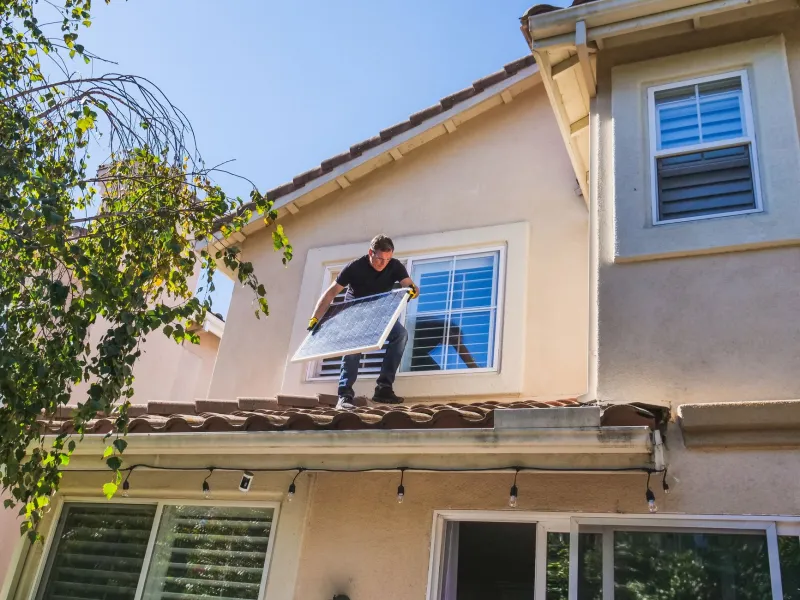
Solar lighting has never been more accessible. Walk into any home improvement retailer from Portland, Oregon to Portland, Maine, and you will find entire aisles dedicated to solar-powered fixtures at virtually every price point. Yet despite this abundance, a troubling pattern persists: homeowners buy, install, feel disappointed, and conclude that solar lighting simply does not work as promised.
The problem, according to professionals who install and service these systems for a living, is rarely the technology itself. It is the mythology surrounding it.
"I spend a significant portion of every client consultation correcting assumptions they formed from a neighbor's bad experience or a misleading product listing," says one licensed electrical contractor based in the Atlanta metro area who has specialized in solar installations for over a decade. "By the time we actually talk about fixtures, half the damage is already done."
What follows is a candid examination of the most persistent and financially costly myths in the residential solar lighting market—presented alongside the evidence that refutes them.
Myth One: All Solar Panels on Lighting Fixtures Perform the Same Way
The small photovoltaic panel mounted atop a path light or security fixture is easy to overlook. Homeowners frequently assume that if a product advertises a solar panel, one panel is functionally equivalent to another. This assumption is incorrect and often expensive.
Monocrystalline panels convert sunlight to electricity at meaningfully higher efficiency rates than polycrystalline or thin-film alternatives. In regions with shorter winter days—think the Upper Midwest or the Pacific Northwest—that efficiency differential translates directly into fewer hours of reliable nighttime illumination. A fixture that performs adequately in Phoenix may deliver genuinely disappointing results in Minneapolis during January.
Installation professionals consistently recommend examining panel specifications, not just panel size, before purchasing. A slightly larger polycrystalline panel does not automatically outperform a smaller monocrystalline one.
Myth Two: Solar Lighting Requires No Thought About Placement
The appeal of solar lighting is, in part, its apparent simplicity. No trenching, no wiring, no electrician. Homeowners translate this ease of installation into an assumption that placement is essentially arbitrary.
Professionals describe this as one of the most reliably costly mistakes they encounter. Solar fixtures require unobstructed access to direct sunlight during peak hours—generally between 10 a.m. and 3 p.m.—to charge their batteries adequately. A fixture placed beneath a mature oak tree, mounted on a north-facing fence, or positioned near a structure that casts afternoon shadows will chronically undercharge regardless of its listed specifications.
"I have seen homeowners replace perfectly functional fixtures two or three times because they kept placing them in the same shaded location," notes an installer based in Charlotte, North Carolina. "The fixture was never the problem."
Before purchasing, assess your intended installation sites across the full arc of a typical day. Seasonal changes in sun angle matter as well—a spot that receives adequate light in summer may fall into shadow for months during winter.
Myth Three: Battery Capacity Figures on the Box Tell the Whole Story
Manufacturer-listed battery capacities are frequently cited in marketing materials as straightforward indicators of how long a fixture will illuminate after dark. The reality is considerably more nuanced.
Battery performance degrades with temperature. Lithium iron phosphate (LiFePO4) chemistries handle cold weather substantially better than standard lithium-ion cells, which can lose a significant percentage of their effective capacity when temperatures drop below freezing. For homeowners in northern states who expect consistent winter performance, battery chemistry is not a minor technical footnote—it is a primary purchasing criterion.
Additionally, the rated capacity assumes a fully charged battery. A fixture that receives only partial sun exposure due to placement errors or overcast conditions will never reach that baseline, making the listed runtime figures functionally irrelevant to the actual experience.
Myth Four: Higher Lumen Ratings Always Mean Better Fixtures
Lumens measure light output, and manufacturers have learned that larger numbers attract buyers. What marketing materials rarely clarify is that raw lumen output is only meaningful in context.
A fixture producing 800 lumens directed upward into a tree canopy contributes almost nothing to ground-level visibility. Beam angle, fixture orientation, and lens design determine how effectively those lumens reach the surfaces that actually matter. A well-designed 400-lumen path light with a focused downward beam will outperform a poorly designed 800-lumen fixture in practical illumination terms.
Installation professionals recommend evaluating fixtures based on their intended application rather than their headline lumen figure. Security lighting, pathway illumination, and decorative accent lighting each require different optical characteristics that lumen ratings alone cannot convey.
Myth Five: Solar Lighting Is Inherently Low-Maintenance
Relative to wired systems, solar lighting does reduce certain maintenance burdens. There are no underground cables to repair and no utility consumption to monitor. However, the notion that solar fixtures are essentially maintenance-free leads homeowners to neglect tasks that meaningfully affect performance.
Solar panels accumulate dust, pollen, bird droppings, and other debris that progressively reduce charging efficiency. In many parts of the United States, a panel that goes uncleaned through a full pollen season in spring may be operating at a fraction of its rated capacity by summer. A simple wipe-down with a damp cloth every few months can preserve performance that homeowners might otherwise attribute to product failure.
Battery replacement is also a routine maintenance requirement that surprises many buyers. Most residential solar lighting batteries are rated for two to five years of useful life depending on chemistry and climate. Treating battery replacement as an unexpected failure rather than an anticipated maintenance interval leads to premature fixture replacement and unnecessary expense.
Myth Six: Solar Lighting Cannot Compete with Wired Fixtures for Serious Applications
This myth cuts in the opposite direction from most others on this list—it causes homeowners to underinvest in solar solutions that would genuinely serve their needs.
Commercial-grade solar lighting systems are deployed across municipal parks, parking facilities, and industrial properties throughout the United States. The technology has matured to a point where properly specified and sited solar fixtures can deliver reliable, consistent illumination for security, egress, and functional outdoor use—not merely decorative accent lighting.
The qualification matters: properly specified and sited. A budget fixture installed in a suboptimal location will underperform. A quality fixture installed with attention to the principles described above will frequently meet or exceed the expectations homeowners have historically reserved only for wired systems.
Making Informed Decisions
The solar lighting market rewards informed buyers and penalizes those who rely on assumptions. Understanding panel efficiency, battery chemistry, placement requirements, optical design, and maintenance expectations before making a purchase transforms the likelihood of a satisfying outcome.
Professionals in this field are consistent in their observation: the homeowners who express the greatest satisfaction with their solar installations are those who approached the purchase as a considered decision rather than an impulse. The technology is capable. The results depend substantially on the knowledge brought to the process.
At Corona Solar Light, our editorial mission is to provide exactly that knowledge—so that every investment in solar energy delivers the illumination it promises.