Why Your Brand-New Solar Lights Are Underdelivering — And How to Fix It Before Year Two
There is a particular frustration that comes with doing everything right and still not getting the results you expected. Homeowners who research solar lighting carefully, purchase reputable products, and follow installation instructions to the letter sometimes find themselves standing in a dimly lit yard wondering what went wrong. The lights flicker off earlier than promised. Runtime falls short of the manufacturer's stated figures. Brightness seems inconsistent from one evening to the next.
This experience is more common than the industry typically acknowledges — and it has a name: first-year underperformance. Understanding why it happens, and what can realistically be done about it, is one of the most practical things a new solar lighting owner can do.
The Battery Conditioning Reality That Manufacturers Rarely Explain Clearly
At the heart of most first-year performance complaints is the lithium-ion or lithium iron phosphate battery housed inside the fixture. These batteries do not arrive at their full rated capacity from the factory. Like the engine in a new vehicle, they require a break-in period during which their electrochemical structure gradually stabilizes.
During this conditioning phase — which can span anywhere from two weeks to three months depending on the battery chemistry and the manufacturer — the cells cycle through charge and discharge sequences that incrementally unlock their full energy storage potential. A battery that delivers 60 percent of its rated capacity in week one may reliably deliver 90 percent or more by month three, without any intervention from the homeowner.
The practical implication is straightforward: runtime figures printed on packaging typically reflect mature battery performance, not out-of-the-box performance. Reading the fine print in a product's technical documentation often reveals a break-in specification buried in a footnote. If yours does not include this information, contacting the manufacturer directly is worthwhile.
What to do: Allow newly installed fixtures to complete at least 30 full charge-and-discharge cycles before drawing any firm conclusions about performance. Avoid partial charging during this period whenever possible, and resist the urge to return or replace units before conditioning is complete.
Seasonal Timing and the Solar Angle Problem
The second major contributor to first-year underperformance is less about the product and more about when it was installed. Solar lighting systems are calibrated to perform optimally when panels receive direct, unobstructed sunlight for a sufficient number of hours each day. In the continental United States, the available solar window varies dramatically by season and latitude.
A homeowner in Minneapolis who installs solar path lights in October is setting up a system during one of the worst possible charging periods of the year. Days are shortening, the sun sits at a low angle in the sky, and overcast conditions become more frequent. That same system, evaluated in June, would likely perform substantially better — not because anything changed about the product, but because the solar resource itself changed.
This seasonal mismatch is responsible for a significant portion of the negative reviews and return requests that occur in the fall and winter months. Homeowners who installed in summer and observed strong performance may also notice a steep decline as the calendar turns, which can feel like product failure but is simply seasonal physics at work.
What to do: If you installed during fall or winter, document your current performance metrics and revisit them in April or May before making any decisions about the system. Additionally, verify that panel tilt angles are adjusted for your latitude. Many adjustable-mount fixtures allow panels to be angled more steeply during winter months to better capture the lower sun arc — a simple adjustment that can recover a meaningful amount of daily charging capacity.
Panel Placement and the Subtle Shading You May Have Missed
Installation guides often emphasize avoiding obvious shade sources — large trees, roof overhangs, nearby structures. What they discuss less frequently is the phenomenon of seasonal shading creep. A panel position that receives full sun in summer may fall into partial shade during winter as the sun's path shifts southward and shadows from fences, shrubs, or neighboring buildings lengthen considerably.
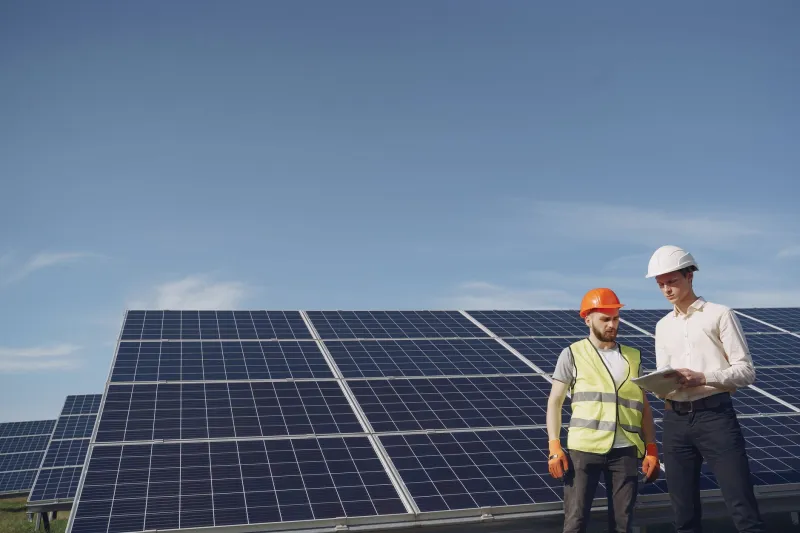
Even modest shading — a shadow covering 20 percent of a panel's surface area — can reduce charging output disproportionately due to the way solar cells are wired together in series. This is a well-documented characteristic of photovoltaic technology that applies to small fixture panels just as it does to rooftop arrays.
What to do: Conduct a shading audit at different times of day and during different months. Use a solar pathfinder tool or a smartphone app designed for solar site assessment to identify potential obstructions across the full seasonal arc. Relocating a panel by even a foot or two can sometimes eliminate a shading problem entirely.
Firmware, Software, and the Smart Fixture Learning Curve
For homeowners who have invested in app-connected or motion-sensing solar fixtures, there is an additional layer of first-year complexity: the system's intelligence needs time to calibrate to your specific environment. Motion sensitivity thresholds may require adjustment. Automatic dimming schedules may not align with your household's actual usage patterns. Some fixtures use adaptive algorithms that genuinely improve their behavior over the first several months as they accumulate environmental data.
This is not a defect — it is a feature that requires active participation from the owner during the initial period.
What to do: Engage with the manufacturer's companion app regularly during the first 60 to 90 days. Review motion trigger logs, adjust sensitivity zones, and experiment with scheduled brightness levels. Many homeowners who dismiss smart solar fixtures as unreliable in month one find them highly effective by month four, simply because they took the time to tune the settings.
Building a First-Year Performance Log
Perhaps the most actionable step any new solar lighting owner can take is to establish a simple performance log from the day of installation. Record the date, the weather conditions, the approximate hours of direct sun received, and the observed runtime each evening. This log serves two purposes: it provides objective data that separates genuine product failure from expected break-in behavior, and it creates a baseline against which future performance can be measured.
A fixture that shows consistent improvement across the log over several months is almost certainly conditioning normally. One that shows no improvement, or that deteriorates, may warrant a warranty claim or technical support inquiry.
The Broader Takeaway
Solar lighting technology has matured considerably over the past decade, and today's products are genuinely capable of delivering the performance their specifications promise. The gap between expectation and reality during year one is rarely a product defect — it is most often a combination of battery conditioning timelines, seasonal solar resource variation, and installation nuances that compound in ways manufacturers do not always communicate clearly.
Approaching the first year as a calibration period rather than a pass-or-fail test changes the entire experience. With patience, a methodical troubleshooting approach, and a willingness to make incremental adjustments, most homeowners find that their solar lighting systems arrive at their full potential right around the time they are ready to enjoy their outdoor spaces most: the long, sun-drenched evenings of a second summer.